8 June 2026 · 5 min
A ship repair is one of the most impressive industrial operations there is — and one of the hardest to photograph well. As an industrial and naval photographer in Setúbal, documenting a full dry-docking means being present at every stage, over several days, at the Lisnave shipyard by the river Sado: a giant ship enters a dry dock, the water is drained, it's worked on by hundreds of people for weeks, and it's returned to the sea like new.
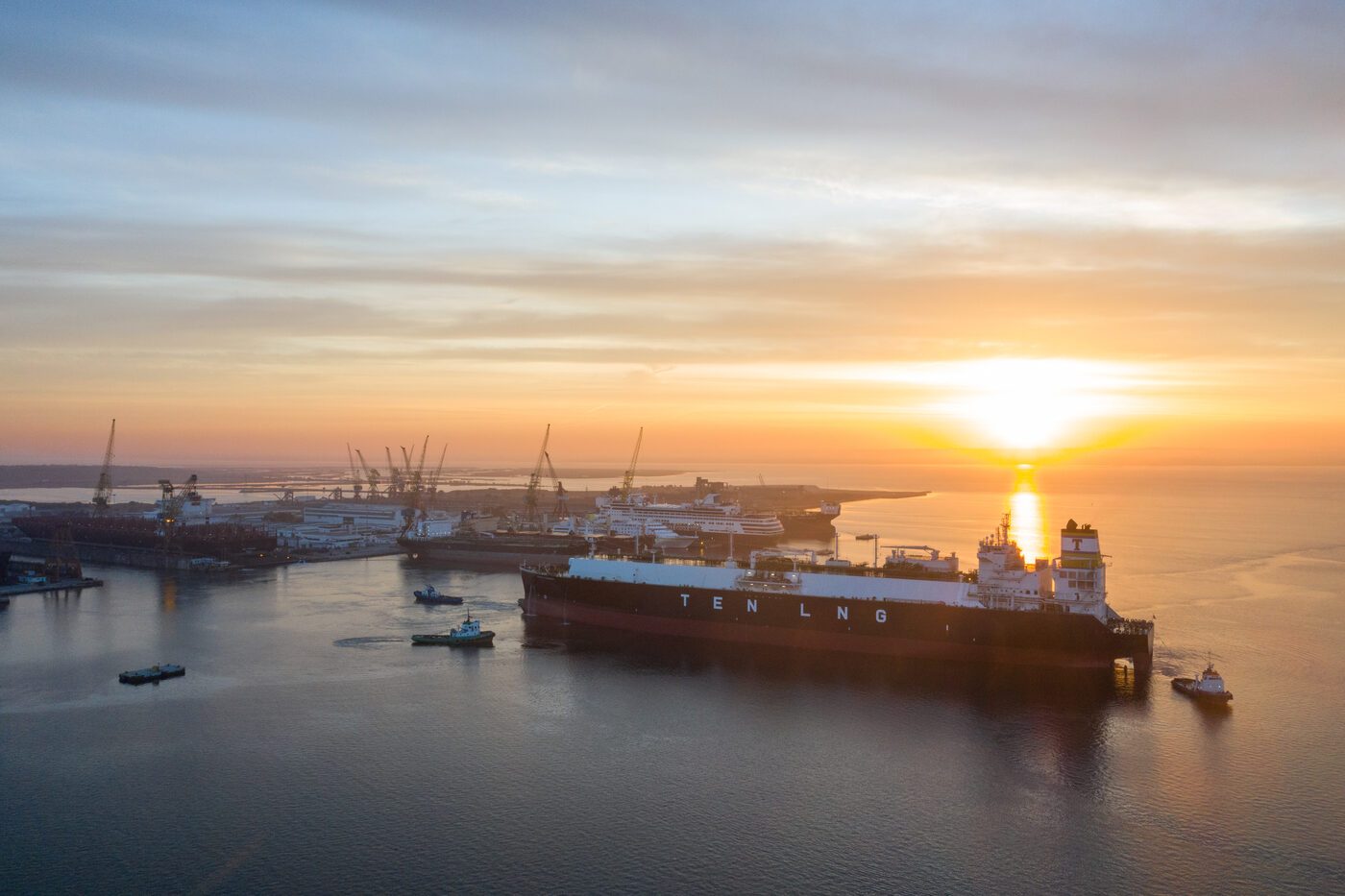
The story begins with the arrival. The Maria Energy, a Tsakos Energy Navigation (TEN) LNG carrier, is towed into the dock, a moment of pure scale that only aerial drone photography can convey. From there the dock is drained and the hull is exposed — and the work that nobody usually sees begins.
Then it's detail and operation. The specialised workshop, where valves and equipment are repaired; the Lisnave team with the client on deck; the gantry crane moving loads; and the painting, from the owner's «N» on the hull to the bow. Each of these images is a layer of the same story.
And there's the perfect close: the flooding of the dock, the water returning, and the ship leaving at dawn, freshly painted and ready to sail. That final image — golden light, clean hull, open sea — is the reward of the whole shoot and the best summary of the shipyard's work.
Photographing a dry-docking means telling a complete industrial narrative: scale, technique, people and time. It's that arc — from arrival to departure — that turns a set of photos into a true ship-repair story. Industrial and naval photography and video for shipyards, in Setúbal and across Portugal.
Keep reading